Things aren’t worse since the last time I wrote – if anything, “worse” is the currency that sustains ‘our’ world.
In our family, 2025 wasn’t our “hardest” year. Truthfully, every year is always harder; the devastation from the previous year accumulates, building to something increasingly bleaker and more oppressive. I used to look forward to the start of a new year because it meant that last year’s weight could be sloughed off – distant enough that the wreckage feels like a desperate-to-forget nightmare but close enough so that we can’t forget, we’ll always remember. It isn’t that we collectively know better – like a feverish optimism that clings, both stubborn and naive – but that every year feels like a reiteration of a performed rehearsal we haven’t accepted as real yet.
I’ve been questioning my entire sense of self the last few months. This wasn’t introspection where you ask yourself, “Well, who the hell am I?” or “What am I even doing here?” It was me looking deep inside and wondering how much more of life can I possibly live, what kind of life we should or cannot take into the following year, and how much worse does ‘life’ need to become before I have no choice but to ask myself those existential crisis questions. I’m never above interrogating myself because I’ve done it my entire life; it’s much easier to swallow other’s thinly veiled disappointment when you’ve already witnessed just how much damage you can enact before others. Life becomes comfortable when you have done the work to make yourself anxious. How much worse can it be if others capital for cruelty pales in comparison to your own afflictive potential?
2025 was a milestone year – and for a family, formed through a union of two who have endured equally brutal and grim lives, that speaks to what last year was.
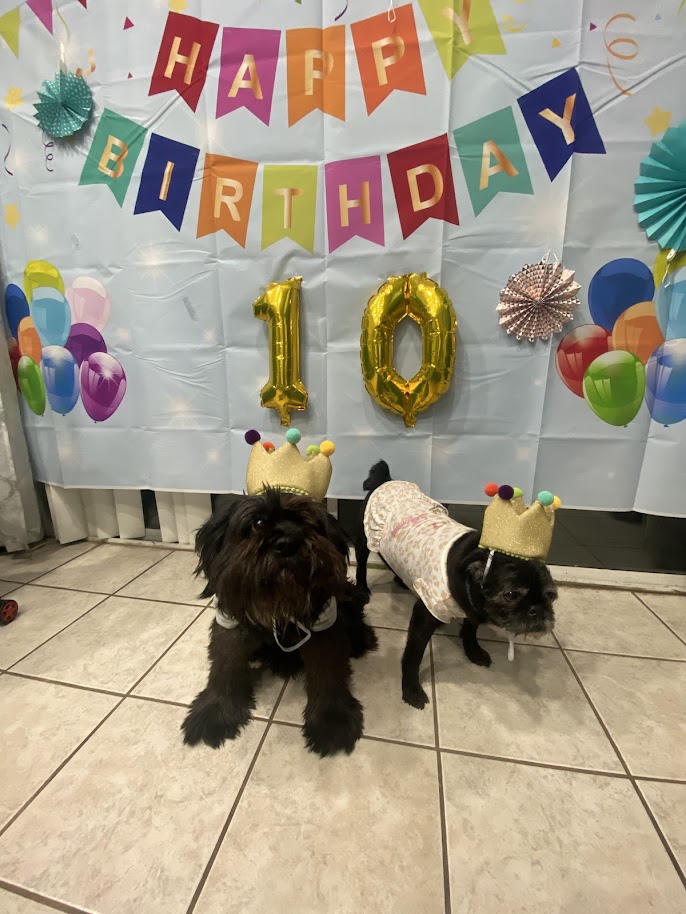
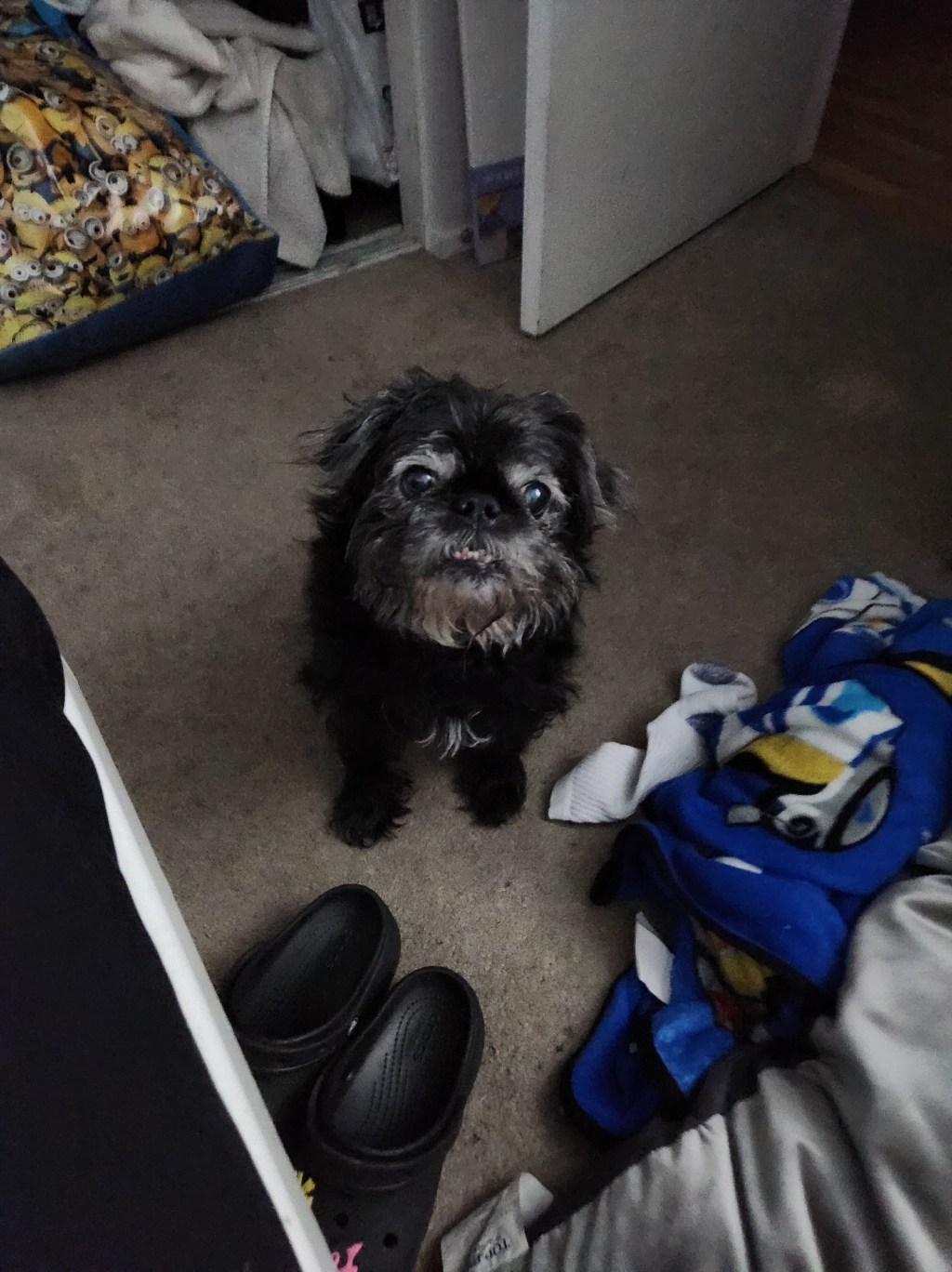
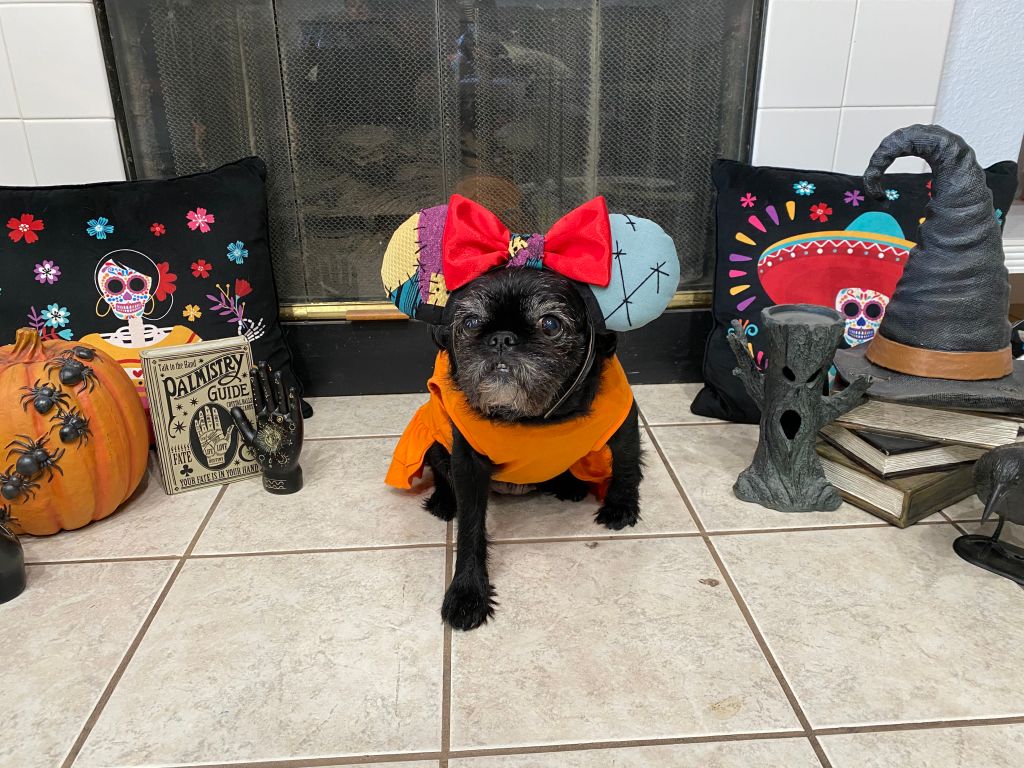
We lost two incredibly beautiful children. And no, not fur children. Children. Sure, we can argue semantics about how Ozilla and Ronaldo don’t qualify within the descriptive framework. We didn’t have human children, but we still had two life forms who were entirely dependent upon us to provide a stable, loving, and comfortable home. We mourned their loss and still do – it is the emptiness of their lives that still linger and persist because our world was only complete with them, through them, by them. Learning to live without Ozilla was unbearable and Ronaldo passing away without a goodbye has made life impossible. How do you move forward when the past and the future both feel partial? What does it mean to inhabit a present that is only marked by the absence of both?
Truthfully, 2025 was a year of abandonment. There are about five to ten different essays on my desktop, all different levels of incomplete and disjointed. Some are notes about theories that I’m trying to parse, still obsessively searching for a framework that clarifies possibilities I’m grasping at in my work, still trying to build a language that can express meaning that I’m not quite sure fully exists. A few are academic essays – mostly about celebrity culture and obsessive surveillance and the etiquette of parasocial behavior, where I’m just frustrated with the crystallization of our predatory culture. There is a book draft I’ve started and three accompanying novels to complete the first – but only once it stops being a perpetual work-in-progress.
I’ve always had a complicated relationship with writing. I remember getting my first “diary” at seven years old. I’ve never willingly kept any of them, but most of these journals were discarded through the many moves my family made when I was a kid. The only one that I still, somehow, have possession of is the journal I wrote intermittently from 8th grade to sophomore year.
Reading through those early entries and now I see its value: writing, without use other than my own, gave me the opportunity calibrate the voice I’d use in other ways. Complaining about boys at thirteen improved my capacity to write through adolescent-driven feelings; without an audience, only myself, I looked inward and found a dialect, without embarrassment, to synthesize sensations and experiences that had generated their own afterlives. Friendships came as quick as they disappeared, and I realized writing through what people meant to me – and how relationships changed my sense of self – offered context to build the keystone for interactions I have with people and strangers who have lingered to this day.
Last year, writing became painful and unbearable. I would sit at my desk and feel the weight of the empty seat beside me, Ozilla’s absence loud and palpable. I started writing in other areas of the home, trying to recreate the ecosystem that had become too dreadful to occupy. I would sit on the couch, still reaching to feel Ozilla curled in my side, neatly tucked in the couch’s armrest and my legs. I sat near my library and stared absently at the matching chair across the room, half-expecting to see our wide-eyed princess glaring at me. Quietly asking forgiveness because her body could not settle in my lap if my laptop was already there. The bedroom was too dark and quiet. The guest bedroom was even less inviting. The laundry room didn’t have sufficient space because we’d been using it as a makeshift storage room.
The dining room worked for some time until we lost Ronaldo.
I half-expected to feel Ronaldo’s mustache hair brushing against my feet. I missed the way he would quietly snore during his late afternoon nap, but what I missed the most was his quiet, invisible presence that wanted to be wherever I was. I still sit at our dining table and feel sad at the recognition that it’s been three months since he left us. Almost thirteen since Ozilla.
Writing about grief was easy because… well, you just write what you immediately know. It’s easy to talk about how something now occupies the space in between your bones, a new structure that has become your anchor for existence. Talking about the agony of absence, how loss restitches you into something you don’t recognize but desperately want to inhabit. It’s simple to write through the way your body, your entire sense of self, can only exist because it’s been cruelly put back together in an awful but irresistible manner. You want to drown in it, even though the surface is waiting for you. You try to rise to the surface but feel something clawing you back down; the submersion, that violent flood, tells you exactly what you already know – this is who you are, and this is where you belong.
I’ve been trying to search for the ways to produce More Life. We can’t afford any more losses.
The truth is: I’ve been quite terrible with it. How do you create More Life when the sadness, misery, and grief have nowhere else to go? How can you give more of something when you feel like you were carved out?
The last few months have been about mending, too.
Since April 2025, I have been reading a lot of Black scholarship. It isn’t that there isn’t value in other Brown & racialized perspectives, but there’s something about Black feminine tenacity – the capacity for Black women to thrive, even in a world that has fundamentally erased their humanity and humanness – that I think I needed to use to reorient myself into a place where I can feel the drive to move forward. Moving forward is carrying the trouble, absorbing it into the body and searching for continued existence through it however you can. I will never be more grateful that Black women are the entryway for me to continue to stitch myself back together, to show up for myself the way I reach to build up others, to look for community, care, support, love, tenderness, and being in pockets of the world that continue to survive, endure, and live under almost impossible costs. I am grateful for the voices of Hartman, Sharpe, Musser, Nash, Spillers, Lomax, Harris-Perry, Bailey, Crenshaw, and the many others who have created a language of assemblage to help us continue, to move us forward and through.
In Wayward Lives, Beautiful Experiments, Hartman writes about the bleakness of Black life in the archives. One of the earlier chapters has an excerpt about the dreariness that exists in these spaces, environments which feel overwhelming, harsh, but are lived-in in such a way that it becomes a world of feasibility.
“No one forgets that they are here because excluded from everywhere else, so you make do and try to thrive in what’s nearly unlivable. It is the Black Belt: You are confined here. You huddle here and make a life together.
In the hallway, you wonder will the world always be as narrow as this, two walls threatening to squeeze and crush you into nothingness. So you imagine other worlds, sometimes not even better, but at least different from this.
[…]
It is ugly and brutalizing and it is where you stay. It doesn’t matter if you don’t love the place; you love the people residing there. It is as close to a home as you’ll get.”1
As I continue to work on the spark of writing, research, the labors of living and trying to move through this world – the impossibility, a world robbed of its saturation, an austere landscape of tremendous pain and devastation – I remind myself that there is still joy, strength, possibility, and hope in the wreckage. Hartman doesn’t romanticize or posit the goodness of such neglect. It doesn’t necessarily make anyone ‘better’ through suffering, humans shouldn’t need to endure cruelty and depravity to learn to build and want and desire a better world for everyone else as much as themselves.
Sometimes these are just the circumstances that circumscribe our realities, as unfortunate as it is. These are the conditions to which humans are exposed to, at the mercy of degradation, dehumanization, violence, pain, affliction, the burdens of tremendous, impossible weights to clawing their way to the end of each day, every moment. You simply learn to live with and by these conditions, through them because that’s what it means to create and sustain More Life – literally anything is better than the inhumane, the dereliction of existence when all else has left you. But at a certain moment it’s not just rebellious or redemptive to imagine something else than a stark existence. It’s neither refusal nor acceptance – it’s understanding that this is what we have, this is who we are, and we can create something out of nothingness.
I hope we don’t simply endure or survive 2026. I would love to surpass it in such a way that we disrupt the boundaries of what we’ve known, that the margins are so full with reminders and notes and celebration and acknowledgment that there is still something waiting for us. It isn’t the utopic horizon, but something more. Something real. Something lived in. Something we’ve earned.
Side note: I wrote this a little more than three weeks ago but in between intense home renovations it’s been difficult to find a dedicated area to write. I’m also on 7 novel ideas (as of today), so my brain is clearly scattered in various directions. I hope to be better with minding this space. Hopefully back to regular programming!
- Saidiya Hartman, Wayward Lives, Beautiful Experiments: Intimate Histories of Riotous Black Girls, Troublesome Women, and Queer Radicals (New York: Norton, 2019), 23. ↩︎

 the desire to be dissolved
Leave a comment