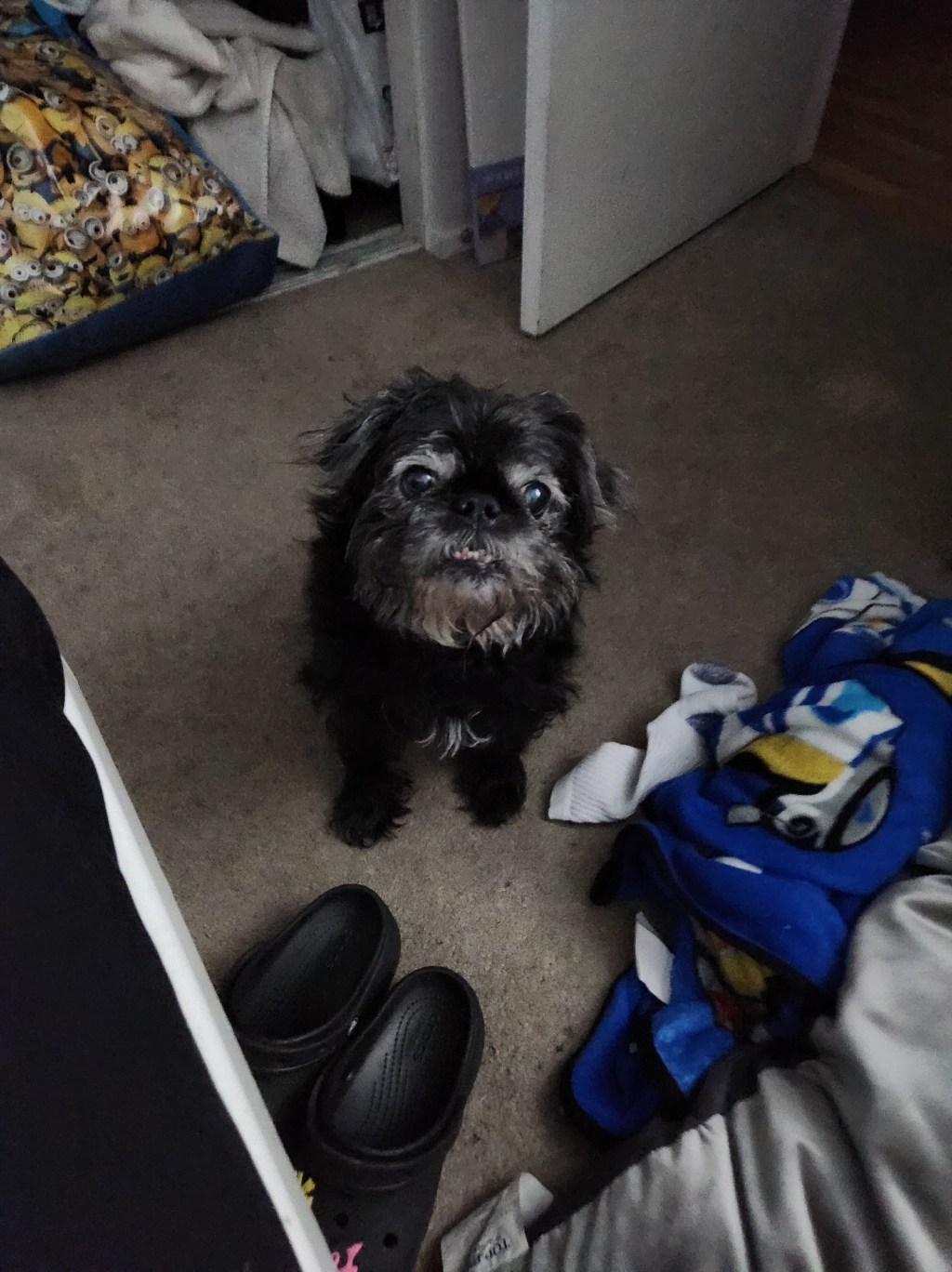
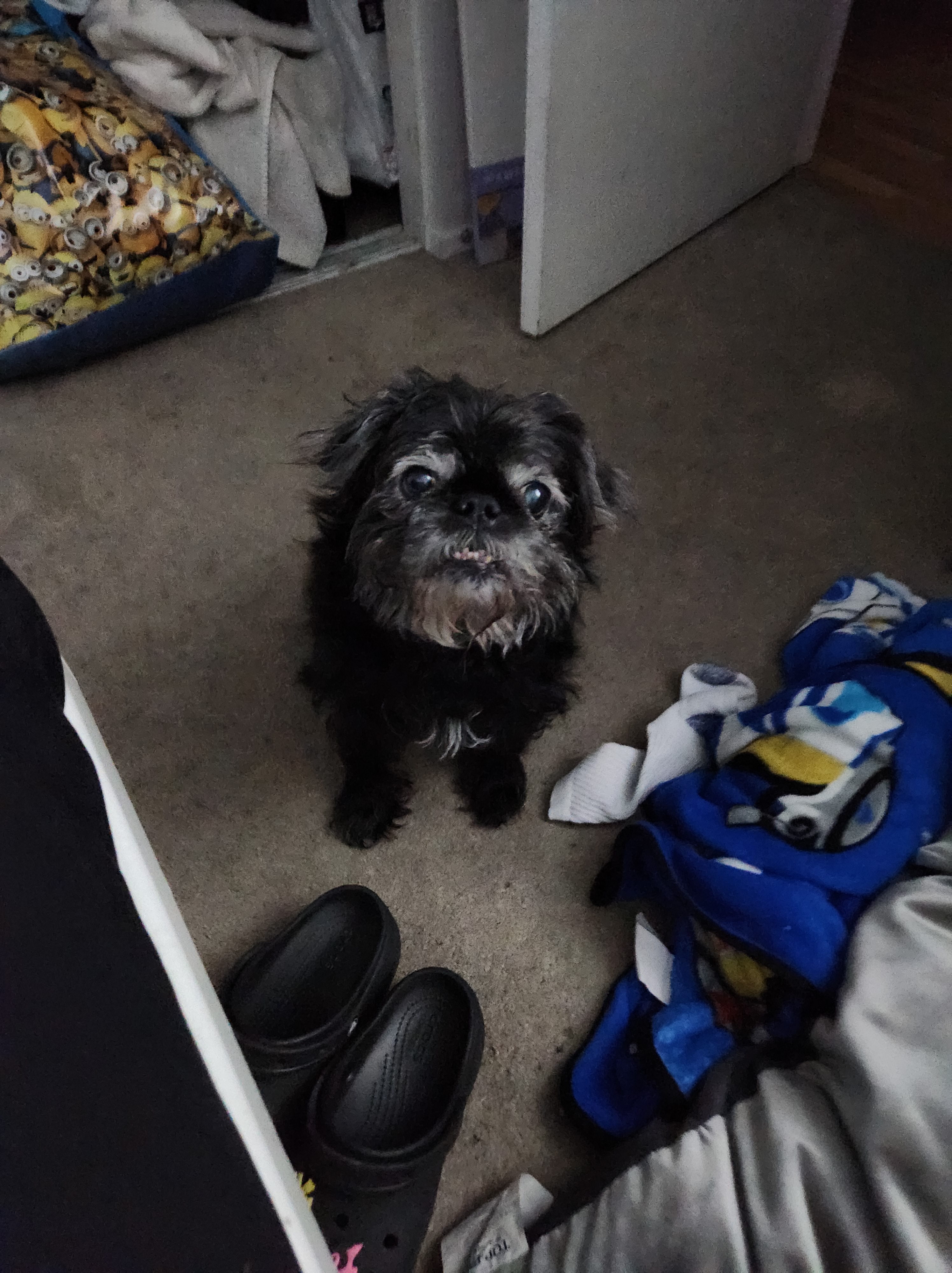
Grief and I have become inseparable these days.
You quickly learn how to adapt to abrupt mood shifts, even though you never wanted to. It shouldn’t be like this, it should never feel so ordinary that it becomes mundane, where you linger in the inconsistencies of questionable happiness and looming dread. Always waiting for an unexpected turn of events. Grief is predictable but striking, a devastating blow that has become as familiar as tapping your fingers on the steering wheel in traffic, as standard as it feels to be perceptive about your own sense of being, existence in space, suspended between acknowledging sensorimotor obsession and forgetting to indulge in simple acts of self-care.
Grief and I are not just partners. We feel like soulmates, bonded, inseparable, a collective body where I have forgotten how to exist without it looming over me. It feels like a pleasant transgression when you sit with it, dwelling in the warmth of that longing, an absence you want to name but don’t have the language for. What arrangement can words possibly develop in order to fully crystallize a sensation of a ghost that dematerializes when you want to desperately cling to it the most?
My sadness and I are entangled together. I don’t remember what it was like before this sensation became the pattern of my world. Truthfully, I don’t want to remember what that life was like; to covet a life before the familiar web of melancholy, heartbreak, and inertia neglects how this mutation has altered me, my world, my reality. It’s a deep, gashing wound, my insides carved out and replaced with simulated vital parts that have become sanctuary.
Everyone’s bereavement looks different, undeniably shaped by unique memory markers, nuances that exist in the ephemera surrounding that which has been lost, things, places and experiences that cannot be fully recovered.
You always try to explain unnamed sensation – the way it sticks to the back of your throat, clinging to the fleshy tissue, avoiding the instinctive urge to claw it out, to pick it out. How it feels so strange to try and sound it out, the same novelty when you hear the sound of your own voice on a recording or repeating a word reflexively that it begins to sound cracked between your lips. How you can never explain the thick, wet feeling that penetrates your belly as you try to rationalize the gap between a physiological response and your own reasonable defense to how and why you feel as you do, the strangeness of living in a body, in flesh, underneath skin that doesn’t feel quite right.
Loss doesn’t simply shape someone into something new. It forces an evolution, a beloved oddity within one’s self that you desperately cling to without even trying. Loss becomes an environ, dépaysement in your own body, sloughed off skin that regenerates the moment you try to peel, slice it away.
There is no moment when that unraveling happens or when you immediately recognize the schism. You live in the afterglow, a shadowy, shimmering home that haunts and comforts.
***
Lately, I’ve returned to writing for enjoyment and pleasure. The truth is that I had forgotten what it meant to write unburdened by order or direction. Frankly, writing had stopped sparking joy for me when Ozilla died. It felt like I had lost purpose and I couldn’t remember why it was that I pursued literally anything in my life. An existential crisis on some level, I’m sure of it, but it felt like I had gone beyond burnout and right before the threshold of self-realized negligence.
I would go weeks where I blankly stared at my notebooks, journals, text documents, notes, assuming that if I craved it enough, digging deep inside, forcing myself to light that flame with a dull spark, that it would magically emerge. I had so many conference and journal publications dashing through my mind, ideas that never found life outside of the interiority of a brain that had dug its own heels in, stubborn refusal, adamantly denying me compassion. It felt like my own body betrayed me, my entire sense of being pitifed itself because nothing would come out.
When I did find words they felt wrong. They still sound inexact, like I’m thumbing through a list of experiences that I have exhausted my resources in pursuit of. Language was elusive, and it felt like I was dwelling so much on lost potential for things I could say, should have said, but could not muster the ability to force it to come out. I sat, trying to remember words, descriptions for experiences that slipped from my grasp because I could not place them. Everything always came out flawed, broken, bleak. It felt like being stripped of the one thing I wanted to fall into, denied freedom because I kept grasping for a phantom world that no longer existed.
Over the last eleven months, I was tackling an impossible task. Documenting the irregularities of my grief has certainly forced me to write and write through what each month’s role is in the journey to moving through the sadness of losing our girl. The challenge was remembering how each month was part of a bigger formation to something that I felt was unsuccessfully answering a question no one had asked. I was considering how my grief was my own, weighing all the different ways that I tried to tell myself I was moving toward something new. Not bad. Certainly not good. But I was processing how I still felt the same, an assemblage constructed from a pile of ruin, of stuff, of the past and present, transposing old circuitry into a barely-there body.
Ozilla’s absence has forced me to thinking through new propositions, trying to invent novel theoretical frameworks that would benefit me and others as I lingered on transience, her fixed life that was both precious and gone.
There are over a dozen incomplete drafts in my laptop, all converging around themes of loss and salvation. How do you write hymns when you lack faith? What kind of compositions can emerge when you look at the residue that now inhabits your being?
There is something mythic about writer’s block. You take for granted having bad days until you’re standing in front of the abyss, depths and absence that you can’t fully understand until you’ve witnessed it. It’s frustrating how grief robbed me of everyday grammar, the sharp cruelty that I was stitching together elegies that sounded like someone else, a stranger who I knew but did not recognize.
The malice in writing what I felt – how absence had grown so loud and deafening, how death’s companionship was both invasive and homely, the bizarre emptiness sinking in to our everyday performances – was that it never sounded quite right, always sounded so disconnected. Sentences didn’t just feel wrong, they were imprecise, mishandling the connection between what I felt inside and what was externally pouring out. Certain verbs were pillaged of their intent and their replacements felt even less sturdy. Paragraphs turned into unintelligible bodies, continuous writing that were hopeless and beyond recovery.
I was both relieved and embarrassed because my body, my words, my capacity to write my way through the trenches had failed. I’ve never failed at anything – at least not outwardly, not to this scale, never where it was so painfully obvious I could not fake it.
***
The remnants of our1 post-Ozilla world is the immutability between me and grief. It’s a perpetual longing for a reality where I could live in blissful naivete to our babies’ mortality, the finiteness of their short, precious lives that are chapters in our own stories. People have tried to brush my words aside when I say that no, their lives are my own, that they were not just a part of my world, but the sinewy tendons that splice me together. It’s as if sidestepping my words, ignoring my voice while discussing my experiences as their provider, their parent, their mother, people can pretend that my grief is incomparable to the legitimacy of sadness, the cost of their lives a drop in the bucket to others.
I inhabit a new body, one that I still don’t know what to do with. I stare at hands that look like my own but do not listen to me when I try to return to the patterns of my life. I see a face curiously similar to one I’ve seen so many times, but I notice something in my facial expression that tells me this is a stranger who looks back at me. I dwell in flesh, tissue and meat and muscle, which feels unremarkably unnatural; caresses and touches in the real world no longer feel pure.
I am tainted. I am blemished, dirtied with the reality that I move in a world that feels lifeless and static.
I still feel joy. I can laugh to the point where I draw tears. I look at my three precious fur children who are still with me and feel consumed with the flames of a love that is unique to each of them, for them and them alone. I have found a new way to navigate my words, as strange as they feel when I look back at them, re-reading so much that the letters begin to fall apart. There are things which satisfy and delight me – losing myself in fiction, going for runs, sitting on the couch and letting Sydney smother me for an hour before she bores of my lap and company, hunting for antiques to furnish our home.
But I am a sliver of who I was before. I am scraps, sutured parts that are snug and unrecognizable. My post-Ozilla world is residue, trying to make sense of whatever I have left. I am trying to move to a horizon that always moves beyond my touch, always moving at a speed that I cannot match.
Grief and I are not only inseparable, but we form a new composite. It is a tapestry of flickers of the different realities that I lived, live, and intend to live. It is a shroud that clings to me, oppressive and beautiful.
Because without it, I would have to imagine a life where I did not grow to understand how deep the love for another life can go. How fortunate and cruel but beautiful it was to be loved by another life, a creature like Ozilla.
I am a patchwork of broken things and sadness, but what a beautiful life it was to have shared with her.
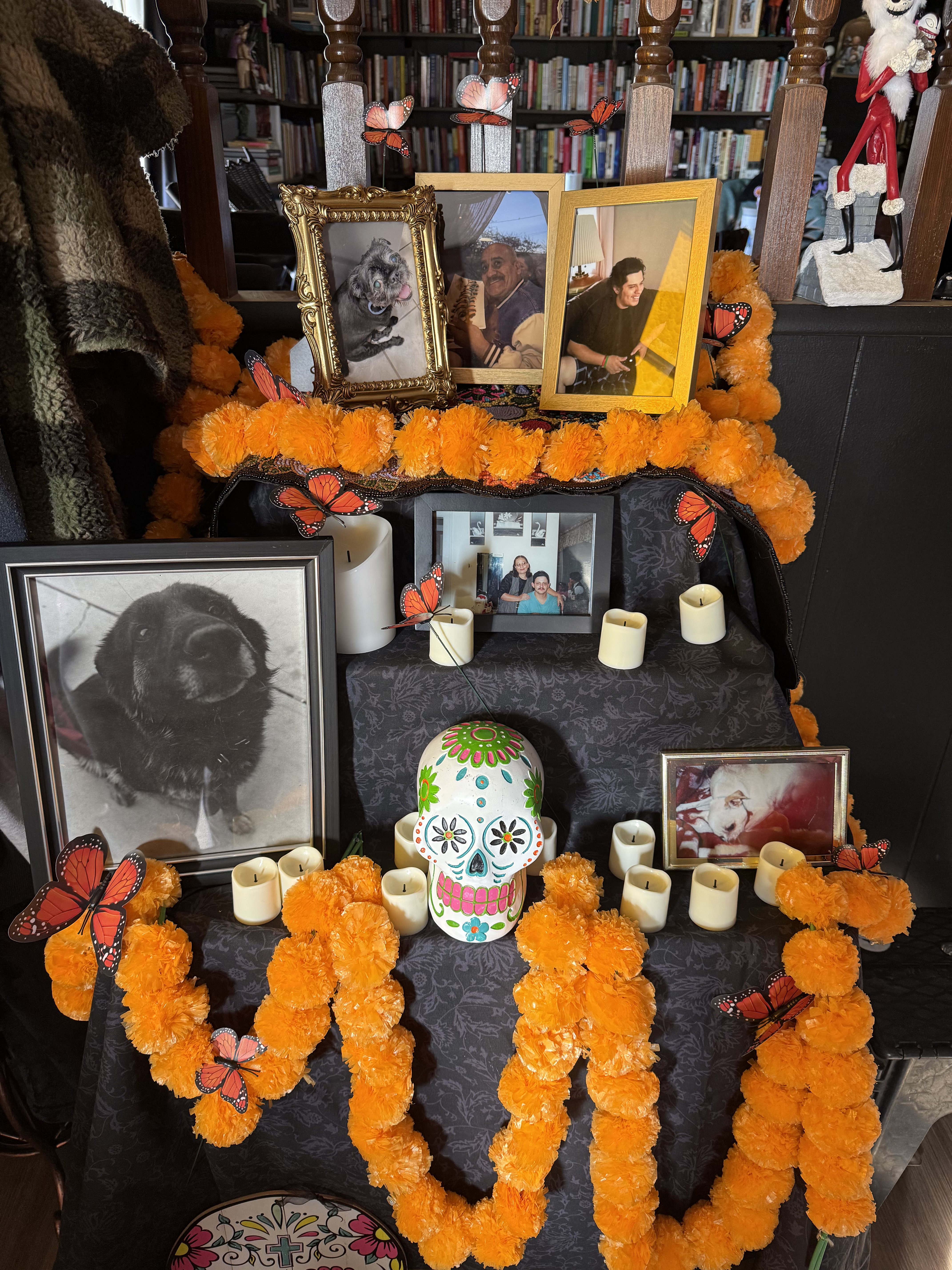
- At some point from my previous post to this one, my husband was interested in reading my writings with everyone else and found my website. Hi honey! Thanks for sitting with me through this, through everything. I can never thank you enough for being our family’s anchor. ↩︎

 the desire to be dissolved
Leave a comment