

If I could go back to any moment, I would revisit the 2020 lockdown period. It isn’t because it was particularly enlightening or productive, but because it gave me so much opportunity to spend time with my little ones. I got to spend all my time with them as free time: what would have been filled with tediously working long hours, reading books to enter grad school prepared (author’s note: it did *not* help), or trying to fill brief interludes of empty time with productive hobbies was instead spent laying in uncomfortable positions or listening to raspy snores for endless hours. If there is anything that encapsulates the dog parent experience it’s how much these little quirks are inconvenient joys.
You get frustrated when they happen, but you can’t help and immediately forgive: unique mannerisms that you look forward to after a really long day. Yes, it took me some time to grow familiar with the sound of Ozilla’s snores in my ear as she stretched out on the pillow at head side (my husband tolerated it; now, he really misses it). I spent the lockdown busying myself with idle activities — lots of painting, doll modification, casual reading, bingeing TV shows, consuming news reports, and sewing. We spent time together as a family, watching movies and gossiping about stupid things we did or wanted to do once societal restrictions were lifted (one of the first things I did post-lockdown was go to San Diego, eat at my favorite pizza place in Little Italy and enjoy a pint with a girlfriend). But I also look back and remember how much time I got to spend in bed with my littles — a mild luxury to occasionally wake up at 8am with a cascade of snores, before the onslaught.
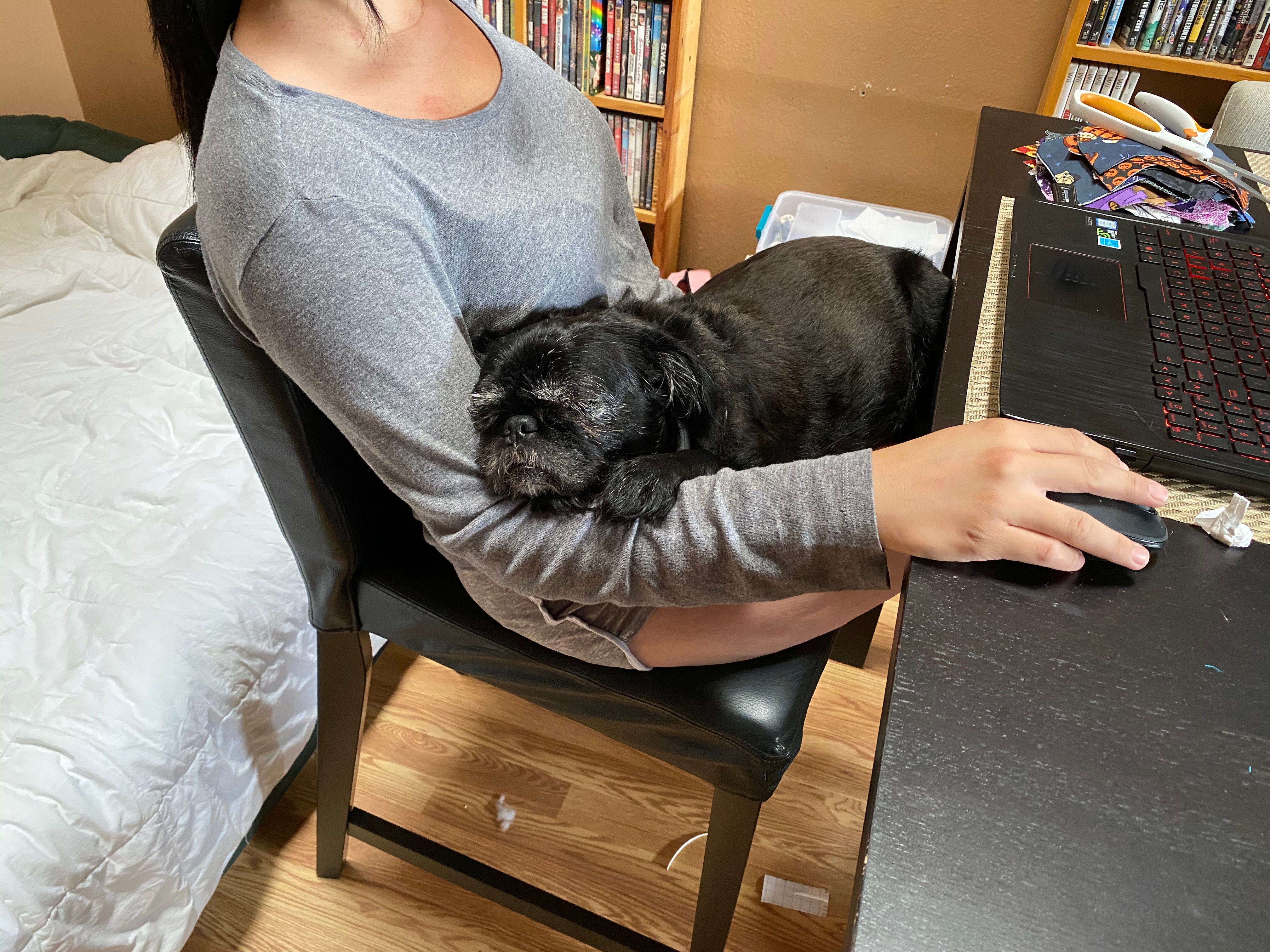
On the two-month anniversary of Ozilla’s passing, I find myself overwhelmed with despondency that there is so much left I still wish for. On a drive to run errands, I told my mother how much I missed her; in an unemotional tone, I confessed that I would sacrifice any number of years of my life just for another year with her. What was fifteen years without her? Apparently not worth living, reflecting back on my offhand remark. I still replay her final twenty-four hours over and over, trying to retrace our steps and asking the common ‘what ifs?’ that follow reliving traumatic memories.
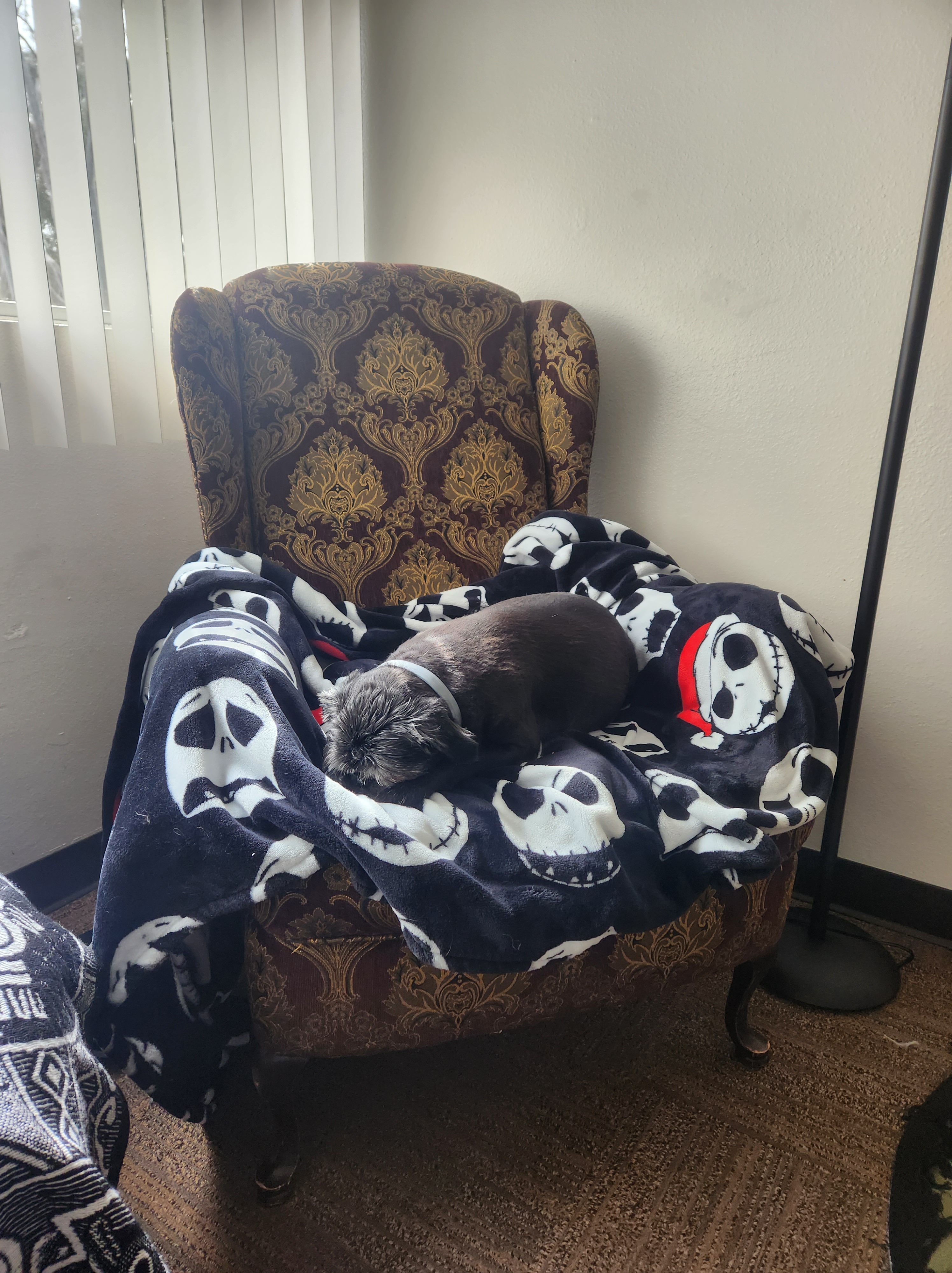
There are so many ‘I wish’ proclamations that I will continue to live with: I wish I had seen the externalized symptoms much more clearly; I wish I hadn’t gone to work that day; I wish I had spent five extra minutes that morning, kissing the top of her head; I wish I had taken her to our normal vet; I wish we had paid the extra to get her transferred to the emergency vet; I wish she could have told me that she had pain; I wish I would have been more careful with her; I wish I wasn’t the one who made the call to stop compressions; I wish I hadn’t failed in my job as her protector.
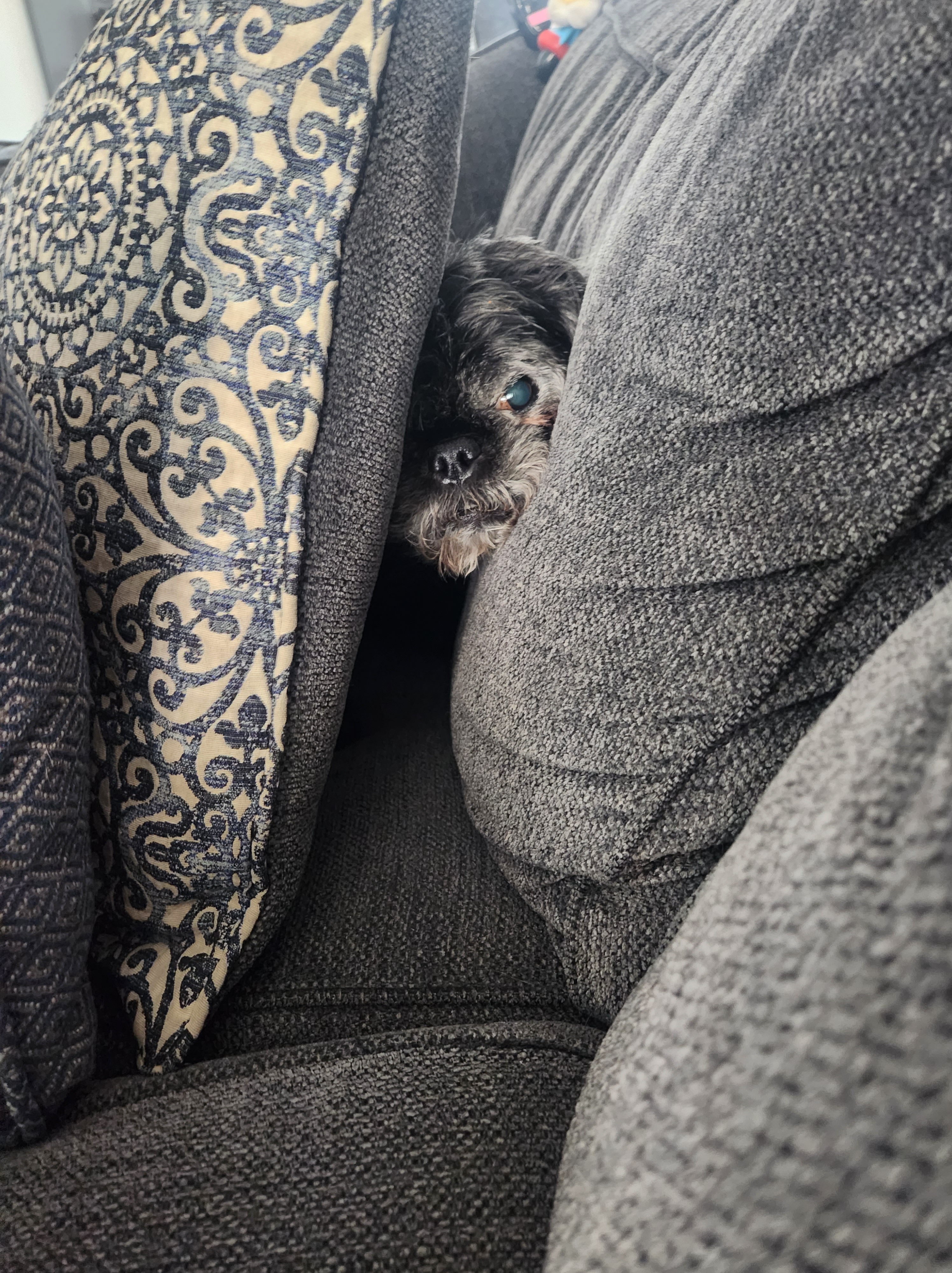
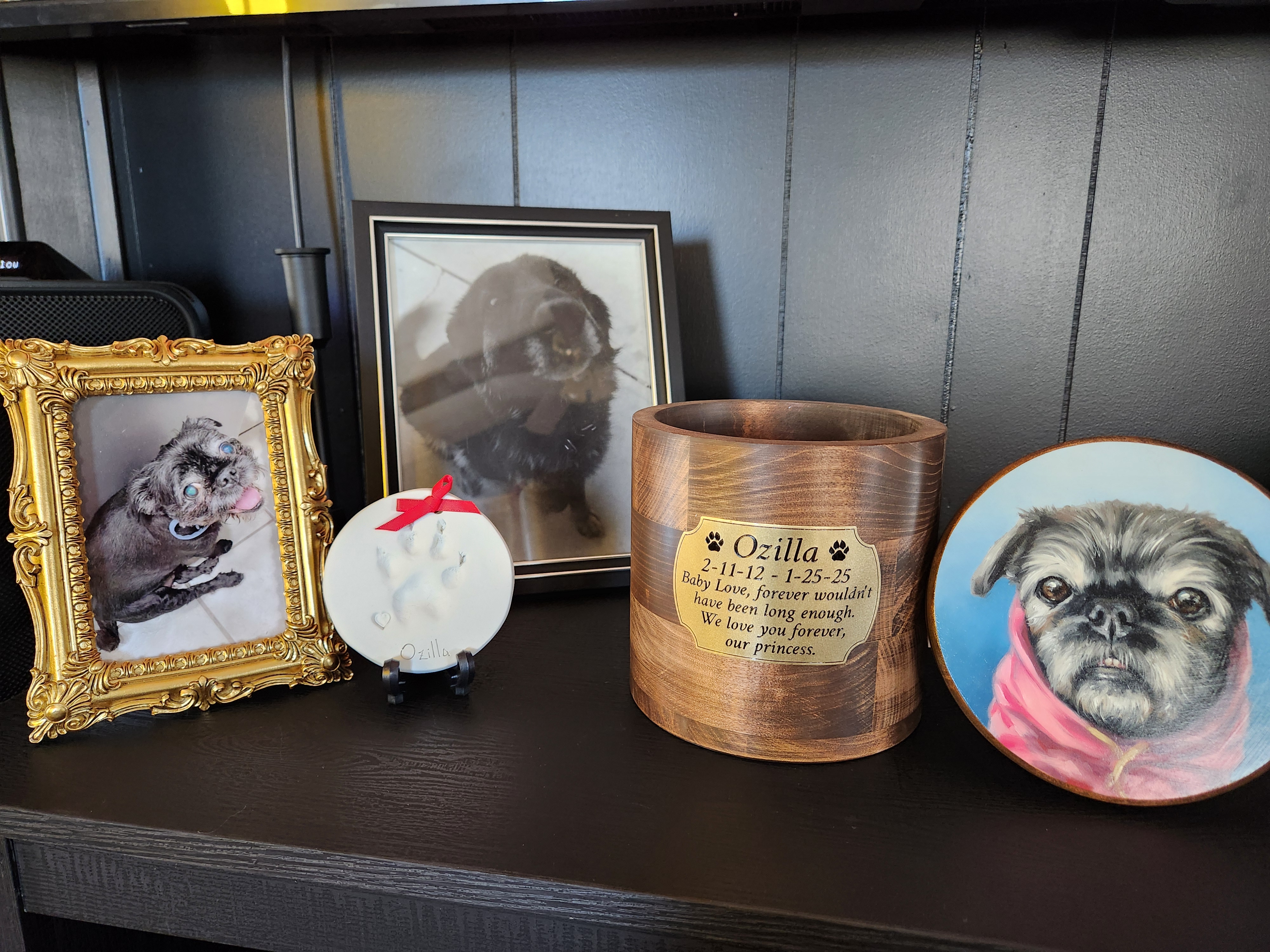
When we travel back and forth, I carry her ashes with me. I don’t know what anyone is thinking (I’m not a mind reader — probably for the best), but I do know that I get immensely sad when I think about leaving her behind. I know her remains are dust, I understand that she can’t feel that — but I can. When I look out of the corner of my eye, I briefly imagine that I can see a round black mass snuggling on the foot of our bed. I do sometimes forget that I won’t turn around and see her curled on our pillows, fast asleep (or at least until she sees me leave the room). Her resting place is only a fraction as beautiful as she was: I tell her this every night as I hold her urn, recounting all of the things that I wish she could be here to help me do. I miss her little repetitively head tilts as I asked her questions, like we secretly understood each other.
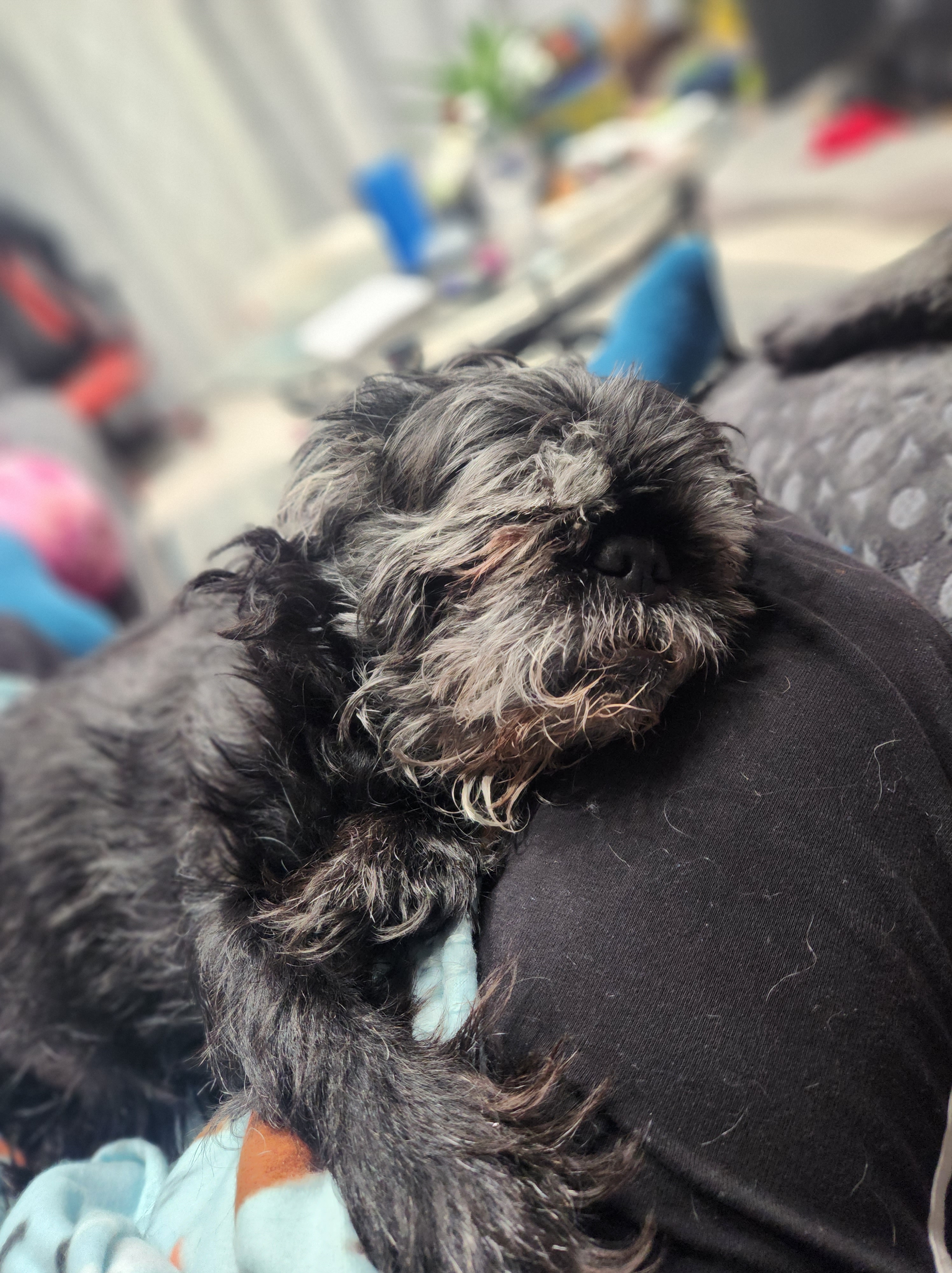
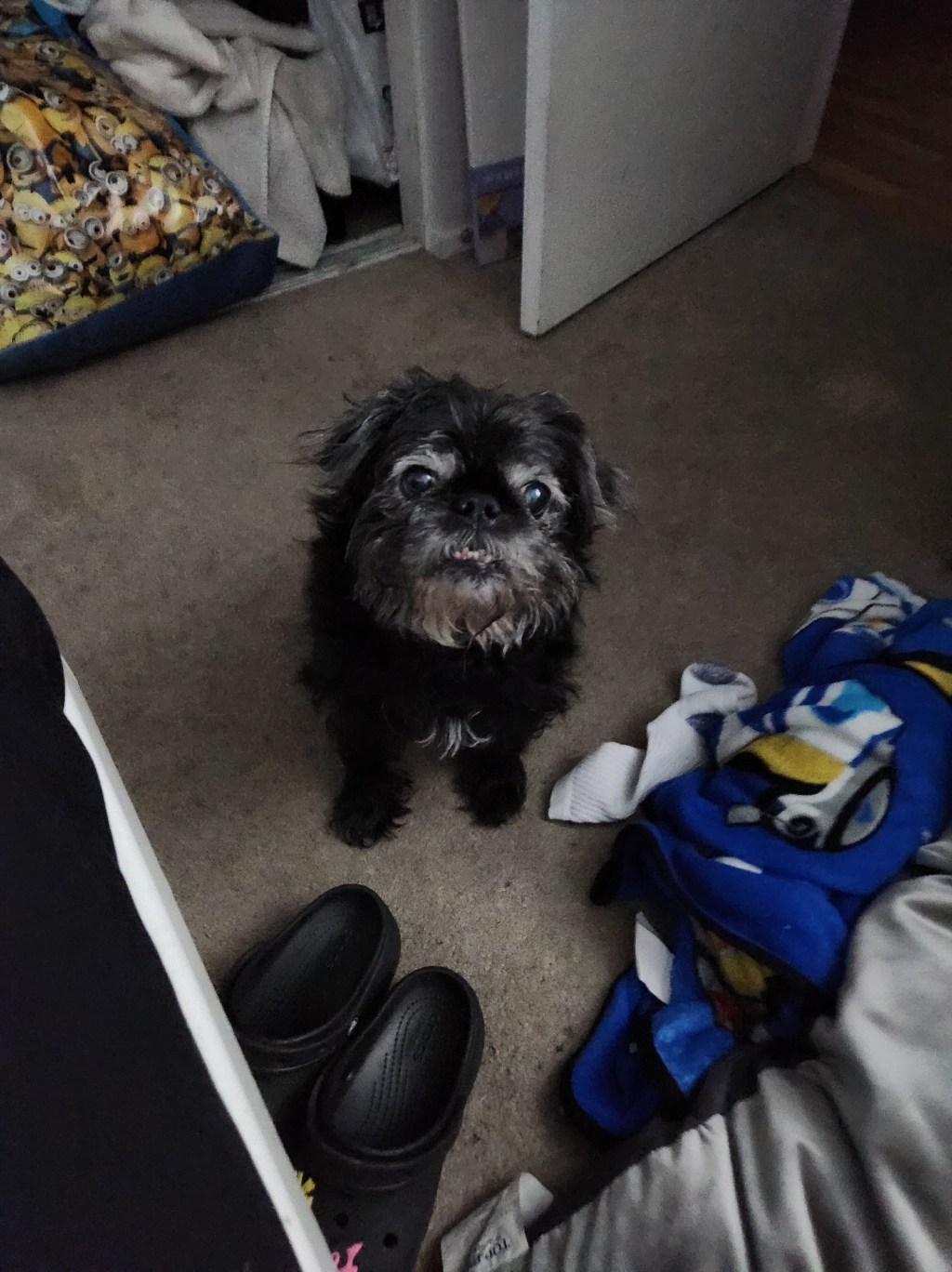
Even if it makes others uncomfortable or unsure of what to say in response, I give myself a reason to talk about her every day. There are little moments where I inject her soul and body back into this world as best as I can, reflecting on the peculiarities that were slivers of Ozilla’s personality. She may have only been twenty-two pounds, but she was life. Ozilla went through moods where she refused to eat breakfast in the morning unless I would spoon-feed her with a special golden spoon; just as quick as she would expect special service, she would cry under her breath if I took too long to mix in her breakfast vegetables. She loved to play with stuffed toys (the one that sits on my desk is a frayed Christmas gift, little puncture holes near the inanimate object’s upward smile), but there was nothing quite like stealing her dad’s fitted hats and parading around the kitchen in circles, letting out a muffled growl in hopes that we would acknowledge her and playfully ‘chase’ after her. I miss when she would subtly notify me that she was in desperate need of attention — by gently placing her paw on my forearm, she communicated that it was time for Mom to graciously set down whatever she was doing and to open her arms for some company. Ozilla would deliberately arrange herself at the front window so she could observe the natural world outside of our home — there were birds, the occasional walking human, but her favorite was signaling that the mailman had arrived. And the post office vehicle was undoubtedly her favorite. Whether she was laying at my feet in the kitchen, beside my desk, stretched out across the floor, or sleeping down the hall in our bedroom, her crescendo of barks reached their fullest when she darted to the front window to let them know that she, too, had arrived.
One thing that you anticipate but are never prepared for is the desolateness. You develop a routine that is structured around providing a particular life for their well-being and happiness; a mild inconvenience here and there, but the built schedule that provides them stability and comfort is all that matters. Grieving this absence is about learning how to reassemble a world where you briefly, for a moment, created a life that called for their needs in proximity to yours. I was wholly unprepared for the post-Ozilla life, an afterlife reality where I had to redesign a daily itinerary that no longer included her presence. This has been the most difficult aspect of learning to live with my ‘grief’: trying to reconcile that this emptiness was inevitable but living in a world where I had hoped that the loss remained perpetually on the horizon. You try your best to live with the conditional short-lived mortality of pets, but it’s always something you are wholly unprepared to face. As I sit at my desk every day, I still count the random occurrences where I forget that she is not snoring at my side, too tired to lick my hand to inform me of her continued presence. I did not anticipate that this loss would continue to hurt and ache as much as it does, but it does and I am still clawing my way through every day, missing her larger-than-life personality that felt like home. And now, it feels like a perpetual part of me is eternally missing.
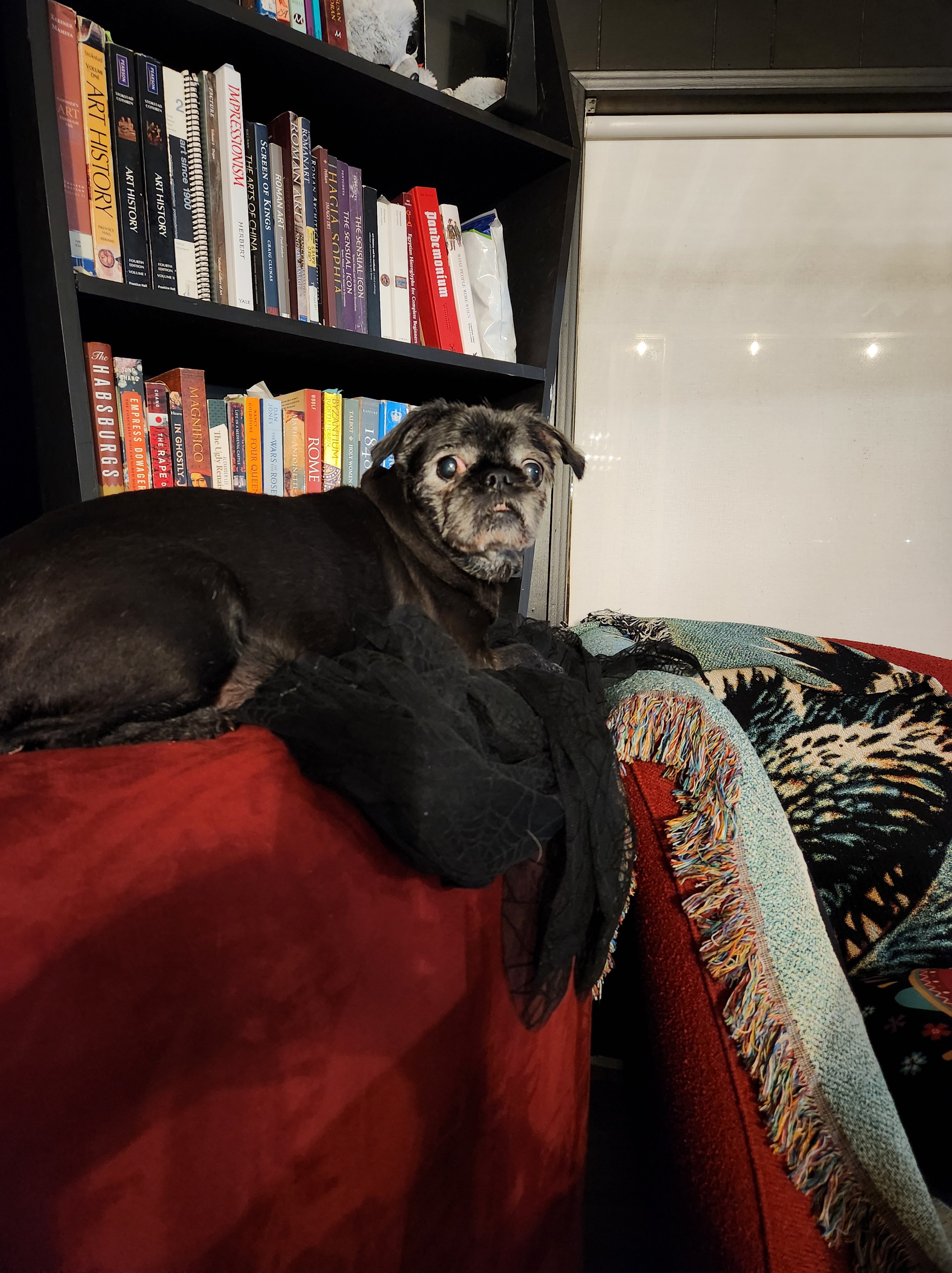
When writing these pieces, I tell myself that this is the best way to keep her here in this lifetime. In me, she will always be alive — I carry her loss, but I carry her warmth, vibrancy, her life within. Tracking how I grieve serves as a relic for how unconditional love has a price; the cost is that their transitory lives are etched into our lifetime, and we carry this burden for as long as we can withstand it. Her short-lived presence could have and should have been longer — not by much, but she deserved more life, more time to be spoiled, loved, cherished, and cuddled more than she would have enjoyed. And yet, I still ask myself how to move forward with this missing part, a void within me and my world that feels like it will devour me at any given moment.
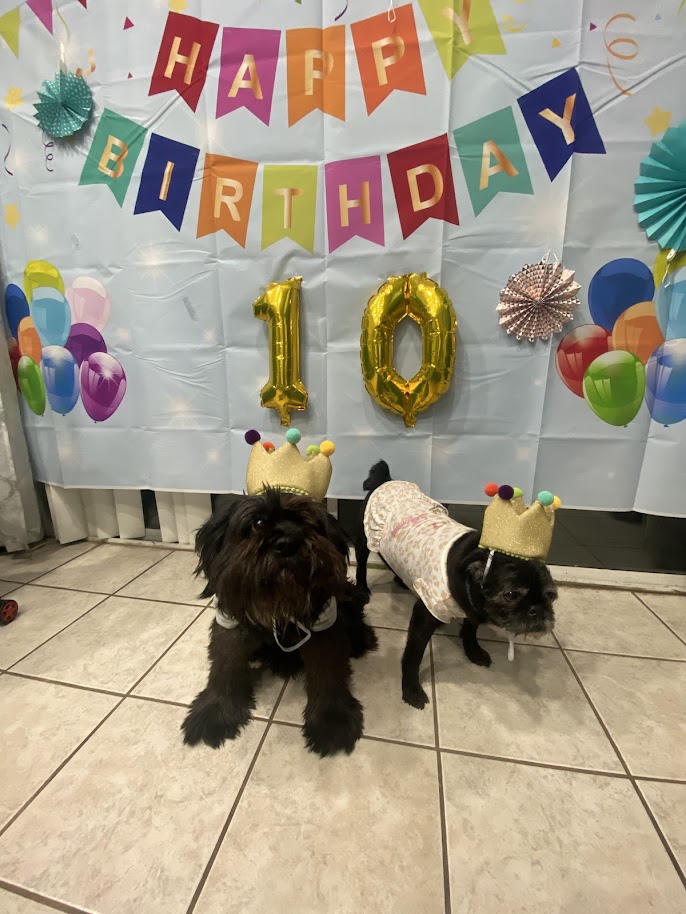
I tell myself that these are cathartic deposits, where I sift through the wreckage of memories, moments, and mementos that linger. The crying has eased, but the pain still feels like a fresh wound; it feels like I relive the long drive home from the vet, having said goodbye to our princess, our little girl’s fragile body no longer full of the life she once possessed. I can feel the soreness of her body, aching as I looked down at her, no longer here with us. I still ask myself: if I knew then what I know now, could I get through this pain? I could have been as prepared as possible, and I know that we still would have been sitting there at a loss for how much going home without her would sting. As I continue to explore the sediment of her brief twelve-year life (two and a half weeks and we could’ve celebrated thirteen), I think of the inconvenience of how so much of our comfort is our inability to truly accept their short-lived existence.
And I miss her terribly. How do I learn to live with a schedule where she no longer occupies that time? How do I adjust that we no longer have a need for X amount of bowls? When will my mind stop tricking me into seeing her curled up body out of the corner of my eye? What will it look like when I learn to stop staring at the same carousel of photos and expecting not to cry? Will I ever be able to listen to the music that played when we received the dreaded phone call?
Another difficulty I’m experiencing is that my grief can be depriving. Sometimes I look at our other babies and hope they don’t ‘recognize’ the darkest moments in my facial expression. Partly, this is an extension of my anxiety, which significantly affects my day-to-day life, but another part is that I don’t want our other littles to feel like my own failures affect how I interact with them. Mostly, I hate that it can sometimes affect our bonding: I periodically force myself to set aside my restlessness so that I can play tug of war with Sydney, scratch Ronaldo’s ears, or rub Athena’s back. And it isn’t fair that they could be denied affection, compassion, love, warmth, or attention because I am doing my best to stay in the present with them.
Grief has become my consort. It’s another condition that I was not prepared for, and it’s one that I am learning to incorporate into my sense of being. I am sad, but I search for little glimpses of Ozilla every day. Sometimes I feel her when I see Sydney look up from the sidewalk, sniffing as the mail carrier drives up. I can see her when I am greeted with black pug imagery on merchandise in the thrift store. I can feel her when I sit at my desk and feel the warmth of the sun. I hear her when I listen to the wind blowing in the leaves of our orange and lemon trees, knowing she, too, would stand still at the sound. I feel her when I look down and touch her permanent face on my forearm.
I wish I could go back to the lockdown — a mild luxury as I continue to live with the wreckage. But I’ll continue to wish for her presence, even if it means there are more tears. She’s only visited me once in my dreams so far, but I like to think that she will come to me when she’s ready (and I will be then, too).

 the desire to be dissolved
Leave a comment